The Evolution of Contact Lenses

Contact lenses are widely used around the world. Helping more than 140 million people correct their vision without glasses. Ora was actually involved in helping to bring a few well-known contact lenses to you. Ora was the CRO for Acuvue theravision with ketotifen and Acuvue Oasys.
The development of contact lenses may be older than you think. In this post, we are going to explore how contact lenses have evolved from early designs to today’s smart lens technologies.
The Origin of Contact Lens Technology
The conceptual foundations of contact lenses date back to the 16th and 17th centuries where inventors proposed methods to alter the eye’s refractive power by changing the environment around the cornea. But the first functional contact lenses appeared in the late 1800s as glass scleral lenses that covered the entire surface of the eye. These lenses did have some of their own issues that made it difficult to adopt widely. Challenges like poor oxygen permeability, significant discomfort with limited wear time and a complex manufacturing process.
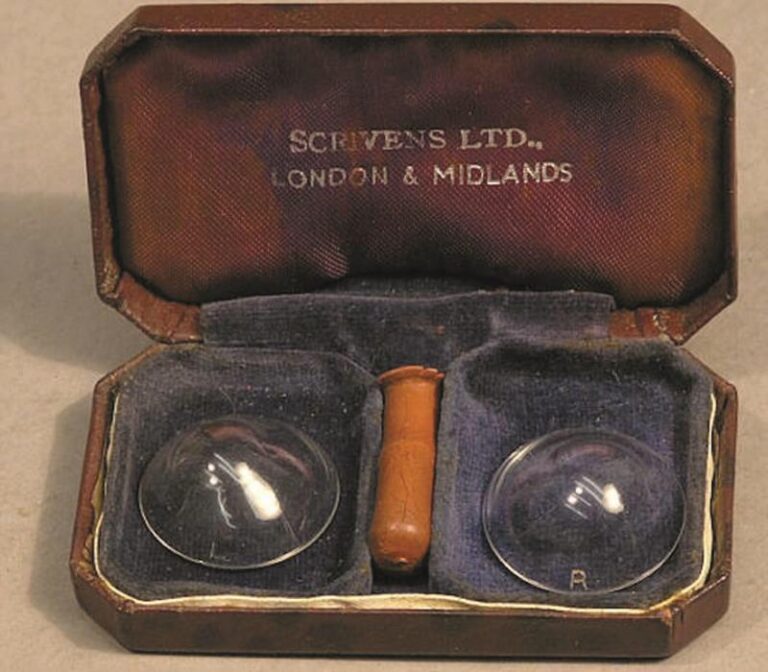
The Introduction of Plastic Lenses
The advent of plastic allowed for a contact lens breakthrough in the 1930s, when glass lenses were replaced by polymethyl methacrylate (PMMA), a lightweight plastic material.
PMMA improved durability and manufacturing. It also enabled the development of corneal lenses, which were smaller and rested only on the cornea rather than covering the entire sclera (white part of the eye).
However, these PMMA lenses still did not allow oxygen to permeate, which meant prolonged use could impact corneal health.
The Revolution of Soft Lenses
One of the most significant milestones in contact lens development occurred in the 1960s with the introduction of hydrogel-based soft lenses.
Hydrogels are polymer networks capable of retaining large amounts of water. This property allowed lenses to become more flexible and comfortable for better long-term wear. But it wasn’t until the development of rigid gas permeable (RGP) lenses in the 1970s and 1980s that we begin getting closer to the contact lens we use today. These lenses incorporated silicone and fluoropolymers that allowed oxygen to pass through the material to the cornea. The early 2000s brought the introduction of silicone hydrogel lenses, which allowed significantly more oxygen to reach the cornea.
The Future of Contact Lenses
With new technologies on the horizon, contact lenses may soon serve not only as vision correction tools but also as platforms for real-time health monitoring and digital therapeutics.

How You Can Get Involved
At Ora, we’re committed to developing innovative solutions for every eye condition. If you or a loved one has uveitis and would like to learn more about clinical trial opportunities, contact our call center at 1-866-393-3767 (1-866-EYE-DROP) or email orarecruiting@oraclinical.com.
Want to Stay Informed About the Latest Blog Posts?
Sign up for updates and never miss a post! We’re excited to share more insights on eye health. Our next blog post will be released on the first Monday of every month.