Clinical Trial Phases: What Does That Mean?
If you’ve looked into clinical trials or even participated in one, you’ve probably come across the terms “Phase 1, Phase 2, Phase 3, and Phase 4”.
But what do those actually mean?
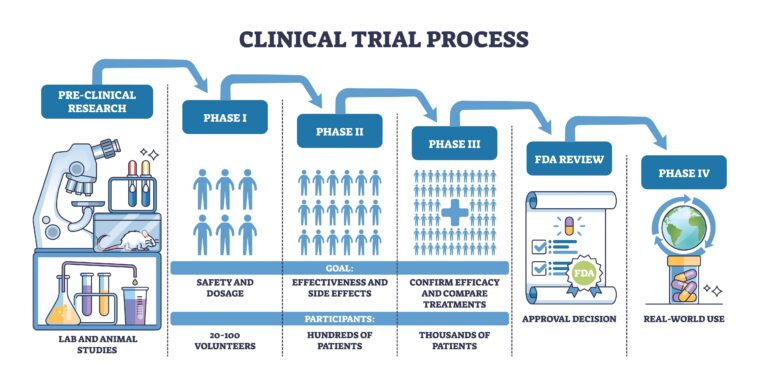
Clinical trials have a very structured and regulated lifecycle. They are carefully designed to help doctors and researchers understand whether a new treatment is safe, effective, and appropriate for patients. Before a new treatment can become available to the public, it typically goes through several stages or “phases” of clinical research.
Understanding these phases can make the clinical trial process feel a little less complicated and help you ask informed questions when considering whether a trial may be right for you.
Why Have Different Trial Phases?
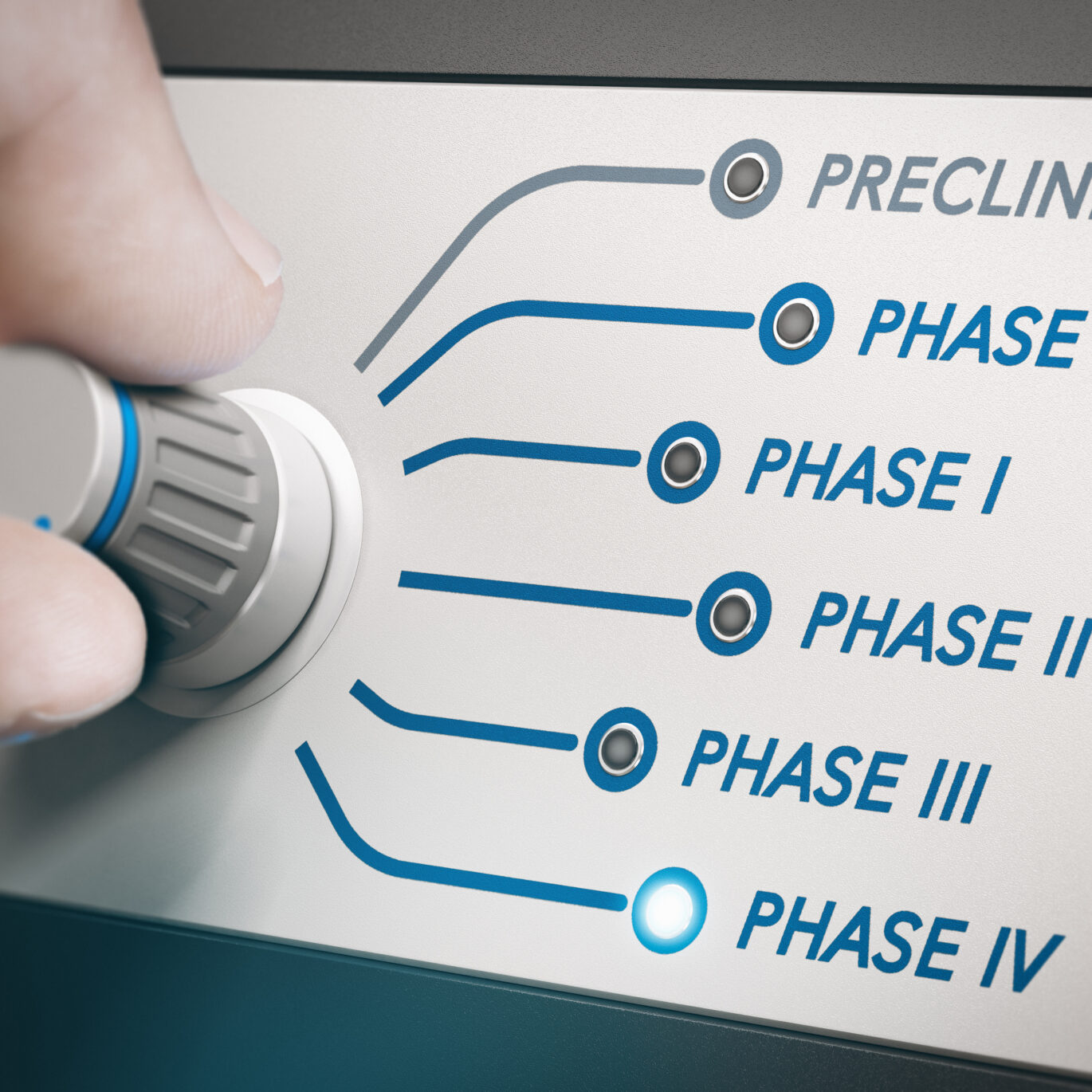
Clinical trials are generally divided into four phases. Each phase has a different purpose, and the number of participants typically increases as researchers move onto the next phase, learning more about the treatment in the process.
Let’s think about the drug development cycle as a series of questions.
Is it safe? → Does it work? → Is it better than existing options? → Are there long-term effects?
Let’s take a closer look at each phase.
Phase 1: Is The Investigational Treatment Safe?
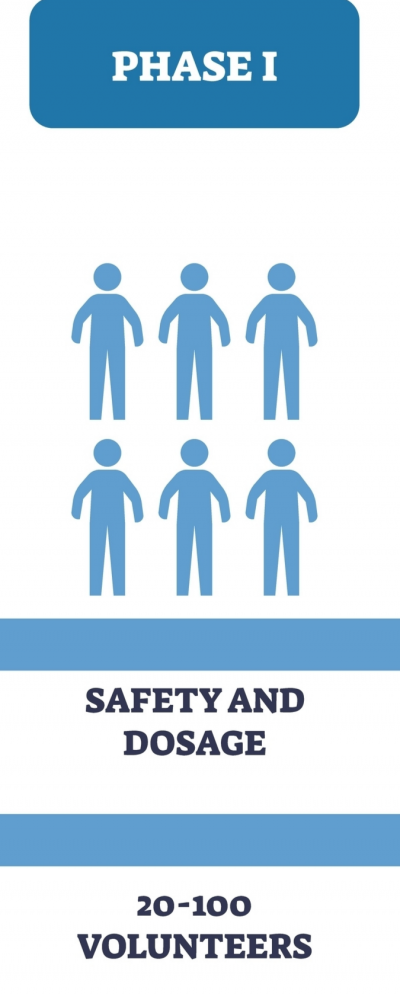
The main goal of phase 1 studies is to identify if the treatment is safe for people to use and are often the first time a new treatment is tested in people. Because of this phase 1 trials generally involve a small number of participants.
Researchers focus primarily on understanding how the treatment affects (absorbed and processed) the human body and identifying potential side effects. During this phase, researchers might also be trying to understand what the most effective and safest dose of the study medication is for humans. Depending on the treatment and study design, participants may be healthy volunteers or people who have the condition the treatment is intended to address.
If you’re considering a phase 1 trial, it’s important to understand that researchers are still learning about the treatment. There may be limited information about its potential benefits and risks. That doesn’t necessarily mean the treatment won’t be effective. It just means researchers don’t yet have enough information to know how well it works.
Phase 2: Does it Work?
The main goal of phase 2 studies is to evaluate effectiveness and continued safety. Phase 2 trials typically involve more participants than phase 1 and focus more closely on whether the treatment appears to work for people with a particular condition. Safety is still monitored as new side effects can be discovered when more people are given treatment.
A phase 2 trial may offer an opportunity to receive a treatment that researchers believe has potential, but its effectiveness is still being studied. It’s important to remember that participation in a phase 2 trial does not guarantee that the treatment will work for you. Clinical trials are designed to answer questions, and sometimes the results don’t turn out the way researchers hope.
Phase 3: Does It Actually Work or Work Better Than Other Treatments?
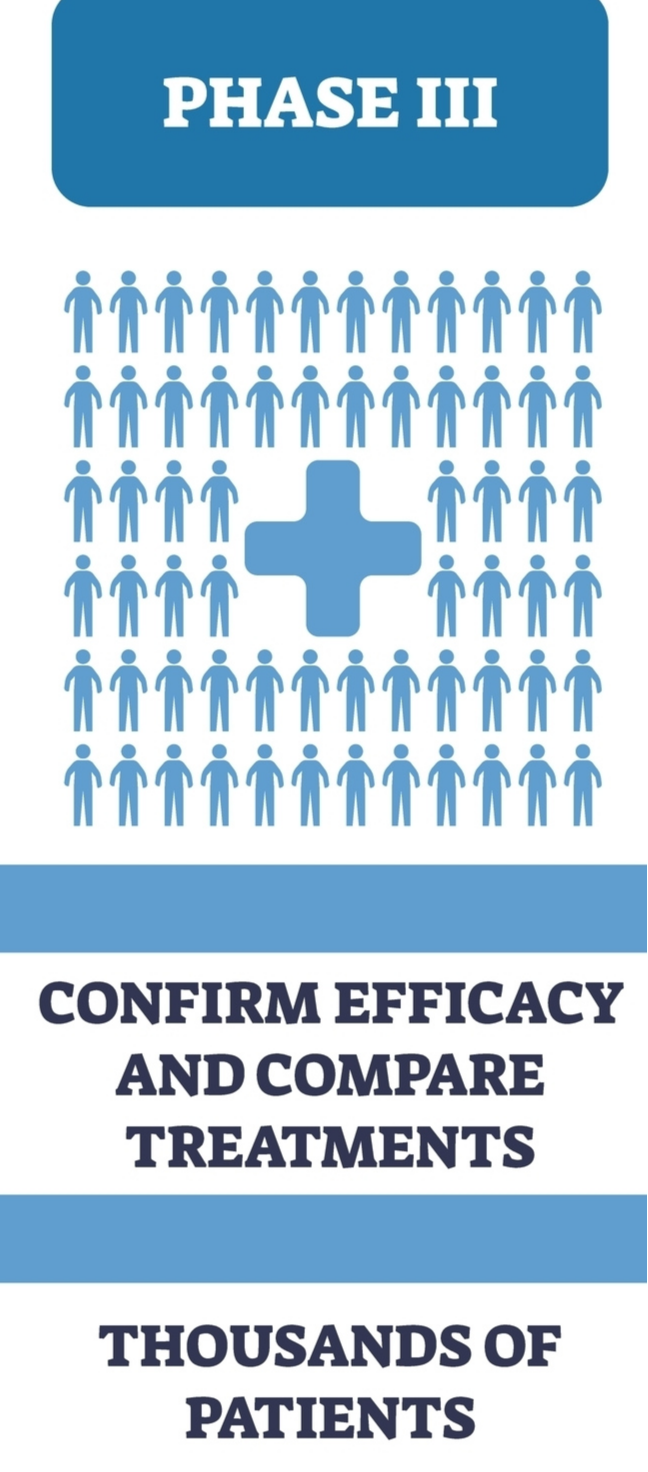
The main goal of phase 3 studies, like phase 2, is to confirm effectiveness and continued monitoring of safety. Phase 3 trials are generally larger, involving hundreds or sometimes thousands of participants. Because of this phase 3 studies also help researchers understand how this treatment works across a broad range of people.
At this stage, researchers have more information about the treatment and are looking to confirm its benefits and better understand its risks. A Phase 3 study may compare the new treatment with an existing treatment, standard of care, or in some cases a placebo.
For patients, especially those concerned about the experimental aspect of clinical trials, phase 3 trials can be an important opportunity to access a treatment that has already gone through earlier stages of testing and has a good amount of information on its potential benefits and risks. However, even phase 3 trials cannot guarantee a treatment will work as intended.
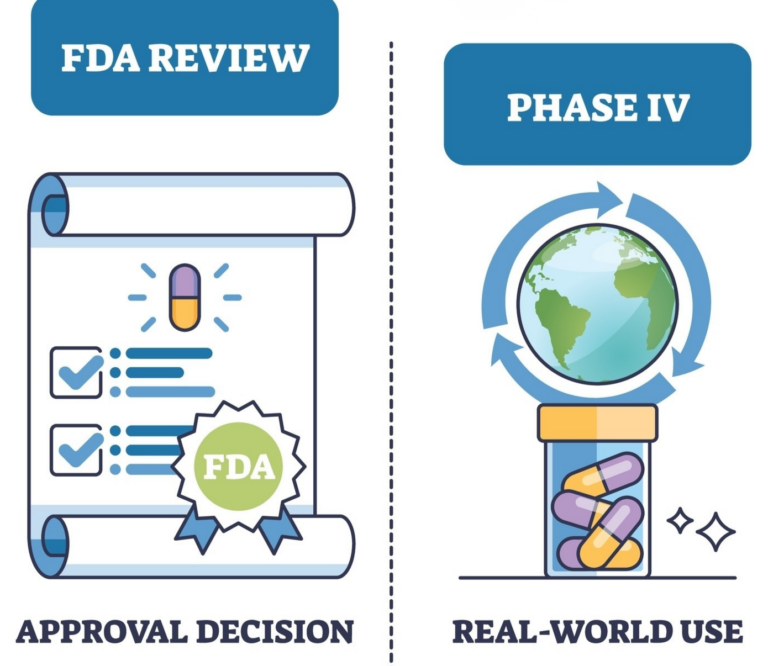
If a treatment successfully completes Phase 3 and meets the necessary regulatory requirements, the study data can be submitted to regulatory authorities, like the FDA. If the treatment is approved, it can now be distributed to the public through a pharmacy or potentially over the counter.
Phase 4: What Happens After Approval?
The investigational treatment is approved, and patients can access therapy without enrolling in a clinical trial. Why does there need to be more testing?
Sometimes researchers may want to continue collecting information about how the treatment works in real-world settings. Studying things like long-term safety, long-term effectiveness, side effects, and how the treatment performs in different demographics can be important.
Participating in a Phase 4 study can be another way to contribute to the understanding of a treatment and help researchers learn more about its long-term use. This may also be an opportunity that offers the lowest risk to patients as the treatment is already approved for general use.
Bottom Line
Clinical trial phases are essentially a roadmap for how researchers evaluate new treatments. Phase 1 focuses primarily on safety. Phase 2 looks more closely at whether the treatment works. Phase 3 helps confirm benefits and risks in larger groups of participants. Phase 4 continues studying treatments after approval.
Not every treatment moves successfully from one phase to the next. Sometimes researchers discover that a treatment isn’t effective enough, causes unexpected side effects, or doesn’t provide enough benefit compared with existing options. That’s an important part of clinical research. A clinical trial can produce valuable information even when the treatment being studied doesn’t ultimately become an approved therapy. A later phase doesn’t mean a better or effective treatment. A phase 3 treatment isn’t automatically “better” than a phase 1 treatment. The phase simply describes where the treatment is in the research and development process.
The best question to ask yourself is “Is this particular clinical trial appropriate for me?”. This can depend on many factors, including the condition being studied, your medical history, the trial’s eligibility criteria, the potential benefits and risks, and what the study requires from participants.
If you’re considering participating in a clinical trial, don’t be afraid to ask questions. Knowing the study phase may help you decide whether to participate and understand the context of why certain procedures are required and temper your expectations.